Biting the Hand that Builds
Rather than using the buildup of unsold condos as a learning opportunity, politicians and pundits have again looked for a scapegoat
Goodman Report
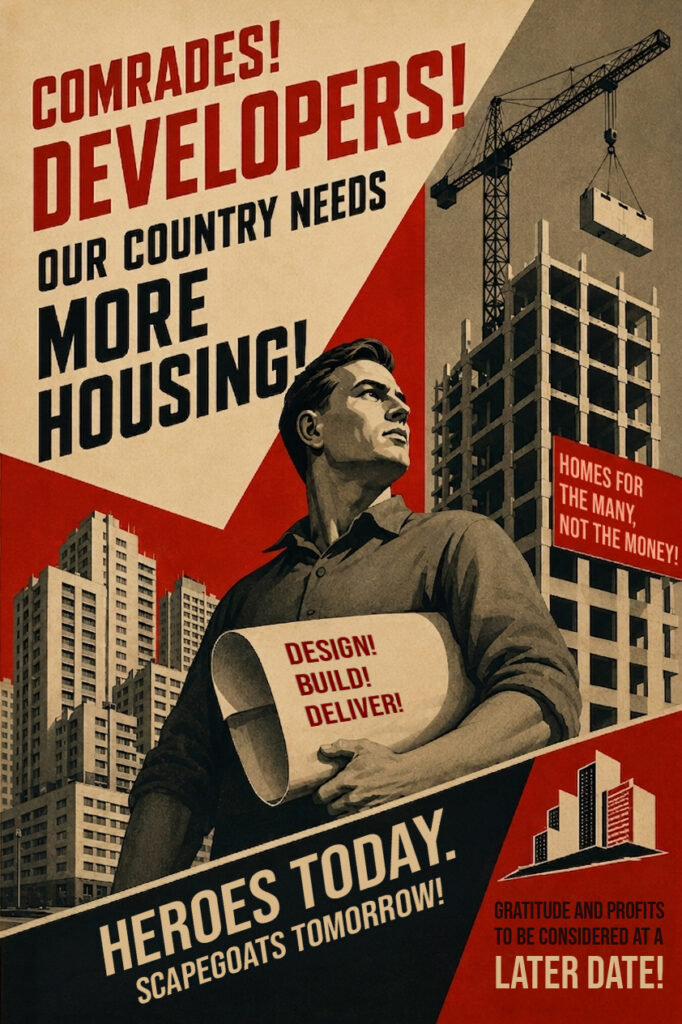
Nobody eats their own quite like Canadian politicians, and no constituency takes more abuse than the real estate development industry.
In other sectors, politicians line up to celebrate business success or to offer sympathy and support when times get tough. In the development and construction industry, which employs more British Columbians than forestry and mining combined, success is met with stricter regulation and higher taxes; then, when the market shifts unexpectedly, the industry itself takes the blame.
This past month delivered a textbook example. Following the federal and provincial governments’ botched announcement of a plan to purchase 2,200 unsold condo units, politicians across the spectrum lined up to take their shots – not at the policy, but at the developers who built the units in the first place.
Premier David Eby was careful to explain his policy would not assist developers who “made a bad bet.” Federal Conservative leader Pierre Poilievre criticized the developers who, he said, “wanted to build those condos at a time when we were in a housing bubble.” Former BC Conservative leader John Rustad called the whole idea “subsidizing incompetence.”
The same politicians who have spent the better part of a decade demanding more housing, imposing targets on municipalities, and spending tax dollars to try to speed up production, now line up to deliver a unified message: the companies that answered the call made bad decisions, built at the wrong time, and deserve the misfortune they’re now experiencing.
The so-called condo bailout is misguided policy worthy of criticism. But punching down on companies that have been doing their best to keep staff employed – at a time when government miscues are already crushing the industry – is a profound failure of leadership. When we talk about creating an anti-business environment, this is it.
The buildup
Consider the conditions that brought us to this moment. Coming out of the pandemic, interest rates were at rock bottom, and federal immigration policies were driving the largest population increase in BC history. There was a massive appetite for condo units, with all signs pointing to a structural shift in demand.
But in BC – notorious for its high costs and painfully slow approval processes – it can take years to break ground on a single project, even when the numbers do work. Against such constraints, the sudden escalation in demand created predictable results. Rents rose sharply. Home prices rose sharply. Presale units were being absorbed within days or weeks. Every indicator that developers rely on pointed in the same direction: build more housing.
The rug pull
Then everything abruptly changed.
Interest rates were hiked higher and faster than anyone expected, driving up mortgage costs and choking off demand from homebuyers and investors alike. Then, under political pressure over housing costs, the feds slammed immigration into reverse – triggering BC’s first population decline in 150 years. The BC NDP, meanwhile, continued its ideological campaign against the small-scale investor, piling on new taxes and restrictions designed to crush the market responsible for the very supply they would later seek to take credit for. Global trade disruptions and geopolitical tensions then piled on, further rattling markets and dragging on growth. All the supply that politicians were begging for during the boom landed in a completely different market.
We now have 4,000 and counting completed and unsold condos in Metro Vancouver. These weren’t inherently flawed units that were never going to find a buyer; many were already sold once – to buyers who defaulted when they could no longer get financing or close. As unsold units pile up, prices have come down, but buyers remain cautious, waiting for the market – and the policies shaping it – to stabilize.
This is not the portrait of an industry that went rogue, made bad bets, or speculated on a market that never existed. This is an industry that responded rationally to market signals and got caught when everything was abruptly flipped on them.
The lesson
Politicians and housing observers are hunting for someone to blame, and for a narrative that gets them attention. But neither will fix what actually went wrong.
At some point, those unsold units were exactly what the market was asking for. The claim that developers misjudged demand or built the wrong product – the dog-crate condo argument – is a tidy story for anyone looking for a villain. It’s also lazy. When these same projects were selling out within days and “unlivable” units were renting for record highs, nobody claimed they were not serving a genuine market.
The lesson here isn’t that developers built too much or misjudged the market. It’s that an industry layered with costs and red tape is unable to respond quickly to shifts in demand. This lag between supply and demand produces the shortages and price spikes we’ve spent decades fretting about.
Blaming the developers now makes no sense – and it won’t fix the problem. What will is finally addressing the glaring issues that make it impossible for them to respond quickly, at prices the market can actually bear. Otherwise, we’re doomed to repeat the cycle – with fewer developers left standing who can – or are willing to – stomach the risk.